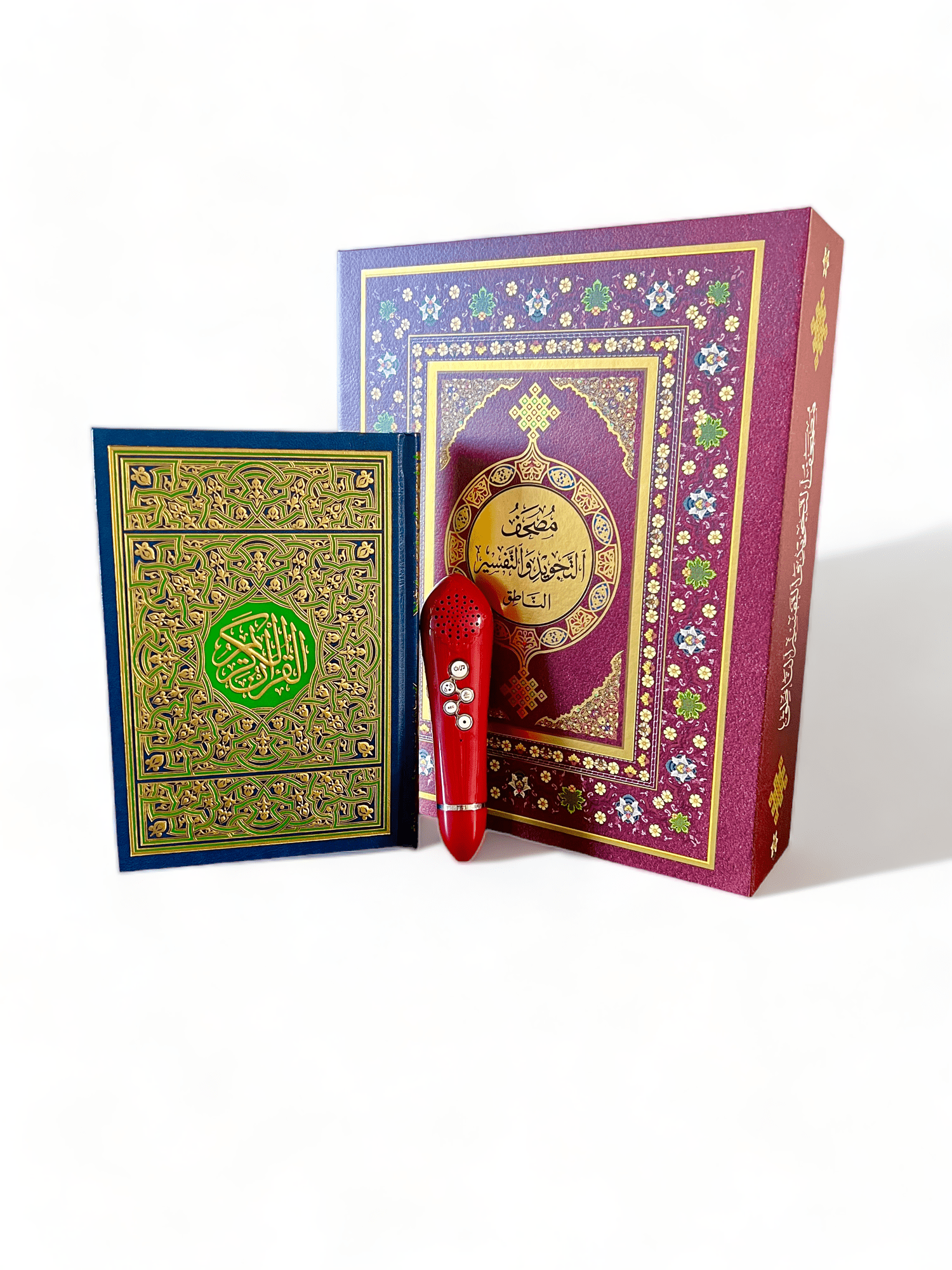
Tajwid: learn the rules of Quranic recitation with the best works
Tajwid is the art of reciting the Quran correctly according to the rules established by Muslim scholars. Mastering Tajwid allows you to honor the word of Allah by pronouncing it with the greatest precision and respect.
Return to our complete guide to learn the Quran for a structured learning journey.
What is Tajweed?
The word Tajweed (تجويد) literally means "to do well" or "to improve". It is the set of phonetic rules and articulation that govern the correct recitation of the Quran. Tajweed includes:
- The correct pronunciation of each Arabic letter (مخارج الحروف - Makhraj)
- The attributes and characteristics of each sound (صفات الحروف - Sifat)
- The rules of liaison between letters (أحكام النون والميم - Ahkam)
- The length of vowelization (المد - Al-Madd)
- The correct pause and starting (الوقف والابتداء - Al-Waqf wa-l-Ibtida)

Why Learn Tajweed?
Learning Tajweed is important for several reasons:
- Religious respect: Reciting the Quran correctly is an act of worship and respect towards the word of Allah
- Improved understanding: Good pronunciation helps better understand the meaning of verses
- Spiritual concentration: During prayer, Tajweed improves your concentration and spiritual connection
- Transmission to children: You can teach your family proper recitation from the start
- Personal excellence: The Quran deserves the best of ourselves
The Fundamental Rules of Tajwid
1. The Points of Articulation (Makhraj)
The first step is to master where each letter comes from in your mouth. Arabic has 28 letters, each with a specific point of articulation:
- The throat: ح, خ, ء, ه
- The tongue: ع, غ, ق, ك, ج
- The lips: ف, ب, م
- And many others with their specific placements
2. The Attributes of Letters (Sifat)
Each letter has distinctive attributes:
- Voiceless vs voiced: Some letters make the vocal cords vibrate, others do not
- Emphatic vs light: Some letters are pronounced with emphasis (ص, ض, ط, ظ)
- Liquid: The letters ل and ر have special characteristics
3. The Rules of Noon and Meem
The Noon (تنوين - the doubling of the n sound) and the Meem (م - the m) have special rules:
- Assimilation (Idgham): Fusion with certain following letters
- Nasalization (Ghunna): A nasal buzzing that accompanies certain letters
- Dissimilation (Iqlab): Transformation into Meem before the letter Baa
4. The Rules of Prolongation (Al-Madd)
Al-Madd concerns the length of the vowel:
- Natural Madd: Prolongation of 1-2 vowel counts
- Obligatory Madd: Prolongation of 4-6 vowel counts (when a vowel is followed by a hamza or a saakin)
- Permissible Madd: Prolongation of 2-4 vowel counts according to choice
The Nourania Method for Tajwid
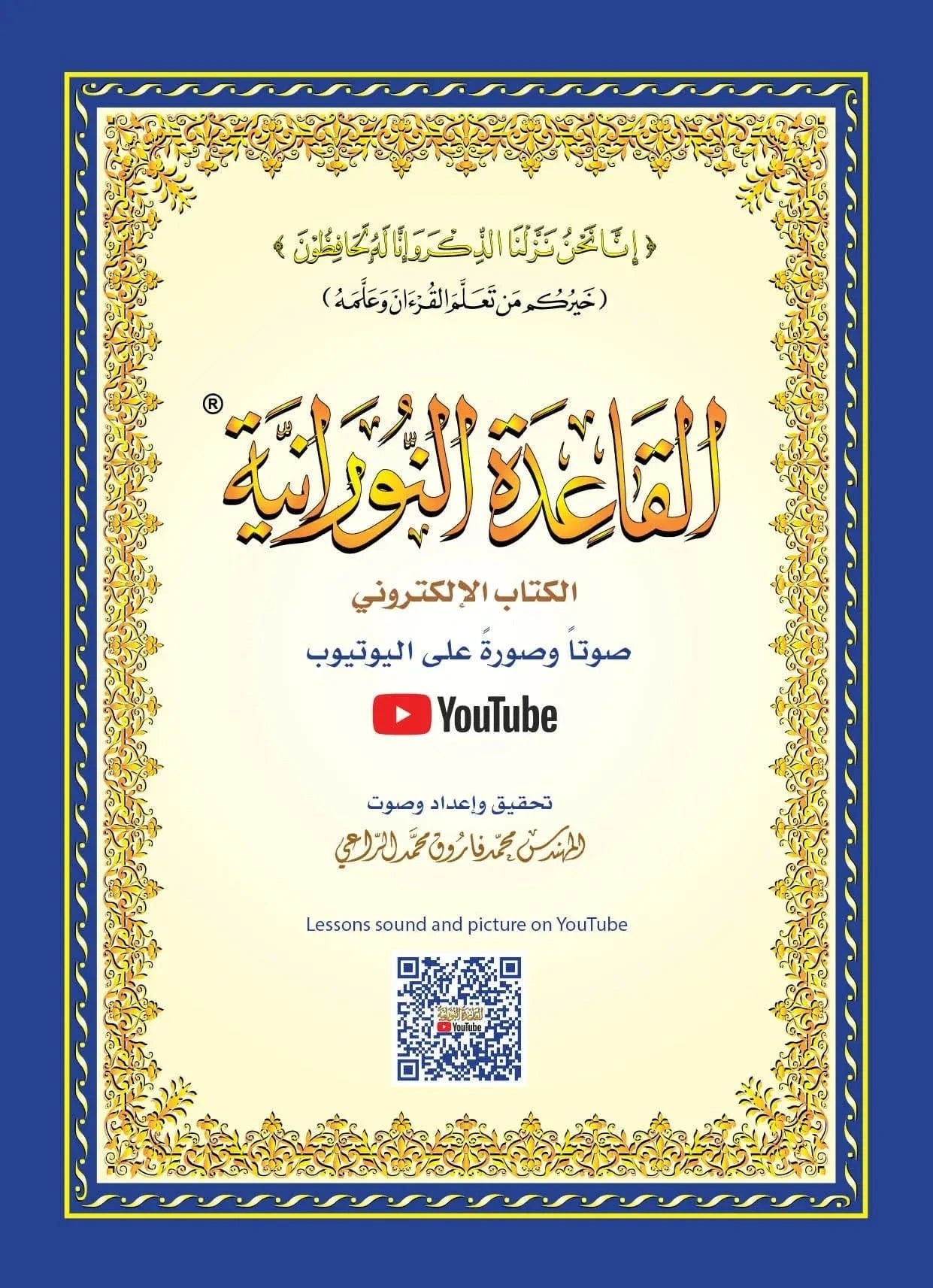
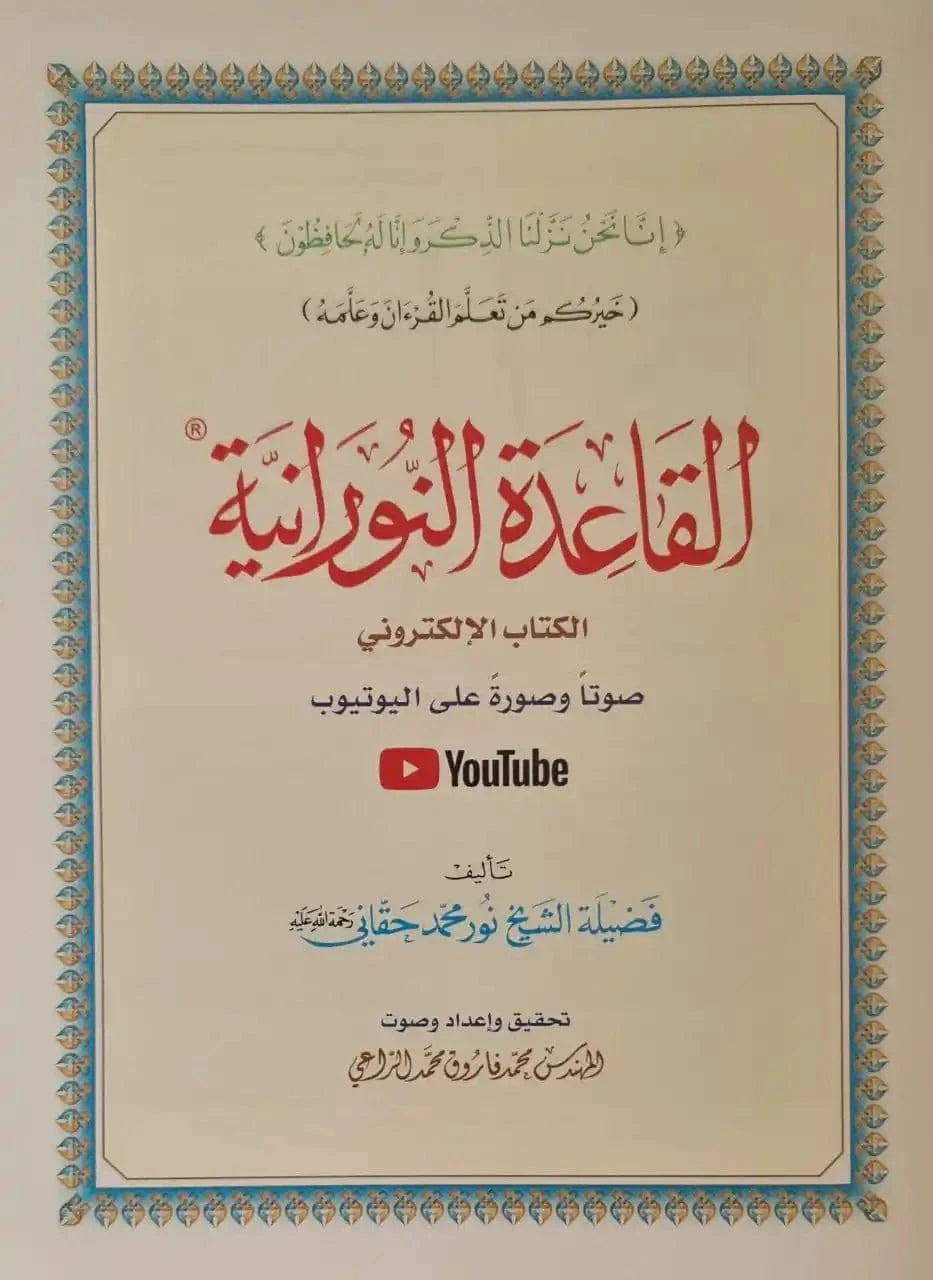
The Nourania method (Al-Qaida An-Nouraniya) is particularly effective for learning Tajwid and reading the Quran. It begins with individual letters then progresses gradually towards complete words and verses.
Discover our complete guide on the Nourania method for a structured and progressive approach.
Also consult our complete collection of Nourania materials including books, cassettes and CDs.
Quran Tajweed: Hafs vs Warch
There are two main schools of Quranic recitation, each with its own subtle rules:
Hafs (حفص)
Hafs is the most common recitation in Europe and Asia.
- Based on the transmission of Hafs Al-Asadi
- More fluent and easier to learn for beginners
- Recommended for those beginning their learning journey
- Ideal for daily use in prayer
Warch (ورش)
Warch is very popular in North Africa.
- Based on the transmission of Warch Al-Bakri
- Includes certain pronunciation variants (for example, the reading of hamza)
- Particularly important for those of North African origin
- Requires additional attention to the differences with Hafs
Explore our annotated Hafs editions and our Warch editions.
Books for Tajwid Beginners
For those starting to learn Tajwid, it is important to choose a clear book with step-by-step explanations.

The Holy Quran - Chapter Amma (Juz Amma)
The last chapter (Juzz) of the Quran is perfect for beginners. These shorter verses allow you to master Tajwid before progressing to longer chapters. Large format with Tajwid notes.
3,50 €
OrderStarting with Juzz Amma allows you to:
- Learn with short and digestible verses
- Master the rules before progressing to longer chapters
- Practice regularly without being discouraged by the volume
- Apply your learning immediately in your daily prayer

Recommended Progression for Mastering Tajwid
Phase 1: Fundamentals (1-2 months)
Focus on:
- Basic articulation points (Makhraj)
- Main attributes of the letters
- Correct pronunciation of vowels (fatḥa, kasra, ḍamma)
- Daily practice with Juzz Amma or the Nourania method
Phase 2: Intermediate Rules (2-3 months)
Progress towards:
- The rules of Noon and Meem
- The rules of prolongation (Madd)
- Correct pauses (Waqf)
- Expansion to other chapters of the Quran
Phase 3: Advanced Study (3+ months)
Master:
- Complex rules and special cases
- Differences between different schools (Hafs vs Warch)
- Fluency and expressiveness in recitation
- Teaching Tajwid to others
How to Practice Tajweed Effectively
1. Listen to Quality Recitations
Regularly listen to high-quality Quranic reciters (qurra). Observe how they apply the rules of Tajweed.
2. Practice Slowly
Do not rush. Slow recitation with attention to the rules is better than fast recitation without Tajweed.
3. Use the Mirror
Look at your mouth in the mirror when you practice. Observe the movements of your tongue and lips.
4. Record Yourself
Record your recitation and listen to it. This helps you identify mistakes that you do not notice live.
5. Seek Feedback
If possible, receive constructive feedback from a Tajweed master. An external eye helps tremendously.
6. Practice Regularly
15-30 minutes daily is better than 2 hours once a week. Consistency is the key to progress.
Key Differences between Hafs and Warch
Here are some of the most important differences:
- The pronunciation of ء (hamza): Different in certain positions
- The prolongations (Madd): Certain rules vary slightly
- The liaisons: The way of linking certain letters may differ
- The pauses (Waqf): The recommended stopping points may vary
Most beginners should start with Hafs, which is simpler and more widely taught. You can learn Warch later if necessary.
Common Challenges and How to Overcome Them
Challenge 1: The makhraj (points of articulation)
Solution: Practice slowly in front of a mirror. Compare your pronunciation with that of a quality reciter.
Challenge 2: Complex rules
Solution: Divide learning into small steps. Learn one rule at a time before moving to the next.
Challenge 3: Maintaining consistency
Solution: Practice at the same time each day. Make recitation a habit.
Challenge 4: Evaluating your own progress
Solution: Record yourself monthly and compare. Seek feedback from a teacher if possible.

Additional Resources
For a comprehensive approach to Tajwid, also consult:
- Our complete Tajwid Quran collection
- The Nourania method for beginners
- Specialized books on the rules of Tajwid
- General resources for learning the Quran
FAQ: Frequently Asked Questions About Tajwid
Should I learn Tajwid before memorizing the Quran?
Ideally yes, but it is not obligatory. Many learn in parallel. However, having a good foundation in Tajwid from the start eliminates bad habits.
How long does it take to master Tajwid?
The fundamentals can be mastered in 2-3 months with regular practice. Complete mastery generally takes 6-12 months.
Can I learn Tajwid alone without a teacher?
Yes, with the right books and by regularly listening to quality recitations. However, a teacher greatly accelerates progress and corrects errors.
Is there a difference in difficulty between Hafs and Warch for a beginner?
Hafs is generally considered simpler. Start with Hafs, then learn Warch later if necessary.
What exactly does "Tajwid" mean in the current context?
Tajwid is simply the correct application of the classical rules of recitation. It is not something modern or artificial - it is how the Companions of the Prophet recited the Quran.
Why do some verses sound different depending on the reciters?
Because there are different authentic schools of recitation (Hafs, Warch, Asim, Qalun, etc.). All are valid and based on authentic chains of transmission.
Conclusion: A Journey Towards Excellence in Recitation
Tajwid is an honor and a responsibility. It is a way to show your respect for the word of Allah while improving your understanding and spirituality. Start today, be patient, and know that every small progress is a victory.
Whether you choose to follow the Nourania method, study with a master, or learn independently, the important thing is to begin. The Quran deserves the best of you, and you deserve to learn it correctly.
Barakallahou fika (May Allah bless you in this quest)!
📚 Also Read
−5% off the entire library with code BLOG5
Valid throughout the site, with no minimum purchase — our thanks to blog readers.
Discover the selection