In Brief
To begin learning tajweed, choose a Mushaf with large and clear font, explicit harakat, intuitive color codes, and a useful index. A progressive 14-day routine will allow you to progress gradually: the first 3 days for reading, days 4-7 for observing the colors, and days 8-14 for applying the rules. Avoid common mistakes such as excessively relying on colors or ignoring the importance of a good teacher.
read also: coran hafs | understand hafs 'an 'asim and choose your mushaf | al-imen
read also: faq coran hafs | qira'at, formats, hafs vs warsh: answers | al-imen
read also: hafs vs warsh | differences in recitation and how to choose | al-imen

How to choose a beginner's Mushaf
Choosing the right Mushaf to get started is crucial. A poor choice can make learning frustrating and slow. A good Mushaf must be readable, well-organized, and suited to your level. Here's how to proceed.
discover our Quran Tajwid collection
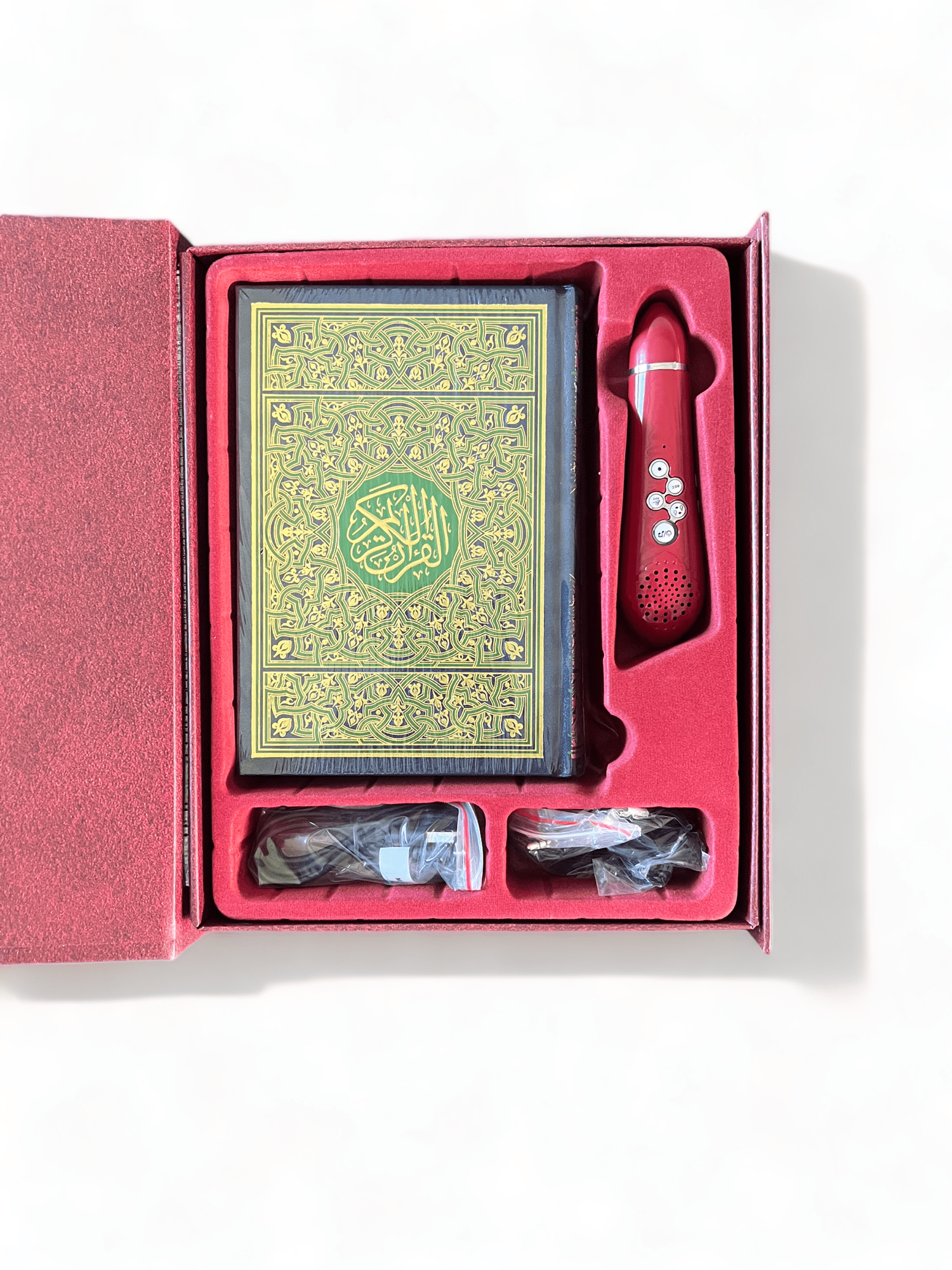
First, visit a bookstore or specialized shop. Leaf through several Mushafs and compare them. Look at the paper quality, the sharpness of the printing, and especially the readability of the color codes. Ask experienced people for their recommendations.
Don't rush into buying the first colored Mushaf you see. Invest time in making the right choice. A good Mushaf will be your companion for months, even years.
Essential Criteria
Here are the criteria to check before buying a Mushaf:
discover our Tajwid rules books
Font: Must be clearly readable. Letters should be sufficiently large and well-spaced. Avoid overly ornamental fonts that impair readability.
Clear diacritical marks: The vowel signs (fatha, kasra, damma) must be distinct and easy to identify. Blurry printing will make reading difficult.
Color codes: Colors must be vibrant and clearly differentiated. Each color must represent a specific rule and be consistent throughout the Mushaf.
Index: A good index of surahs and a bookmark system facilitates navigation. Some Mushafs also offer a rules index.
Sufficient margins: Margins should be wide enough to add your own notes if necessary.
Paper quality: The paper must be white and opaque. Poor quality paper can cause vision problems after prolonged reading.
Progressive 14-Day Routine
Here is a progressive plan for the first 2 weeks of learning:
discover our Coran Tajwid Hafs
Days 1-3 (Simple Reading): Read slowly a short surah such as Al-Nas or Al-Fil. Do not focus on the colors or the rules. Simply focus on basic pronunciation. Read each verse several times until you feel comfortable with the pronunciation.
Days 4-7 (Color Observation): Reread the same surah, but this time, observe the color codes. Identify the red, green, blue and gray areas. Do not try yet to apply the rules, just observe the colors and understand where they appear.
Days 8-10 (Introduction to Rules): Begin applying the rules. First learn the madd (prolongation of vowels). Read the surah by consciously prolonging each long vowel according to what you see in red.
Days 11-14 (Adding Ghunna): Add ghunna to your reading. Listen to how native speakers pronounce this nasal sound. Practice until you can reproduce the sound naturally.
Common Mistakes of Beginners
Mistake 1: Depending too much on colors. Beginners often think that colors do everything. In reality, colors are a guide, not a complete solution. You must understand the underlying rules.
Mistake 2: Neglecting a good teacher. Some think that with a colored Mushaf, a teacher is not necessary. This is a serious mistake. A teacher can correct subtle errors that you would not notice on your own.
Mistake 3: Reading too quickly. Beginners want to progress fast. But accuracy is more important than speed. Read slowly and consciously at first. Speed will come naturally.
Mistake 4: Not practicing regularly. Learning tajwid requires daily practice. Practicing one hour per week will not be enough. 15 to 30 minutes per day is much more effective.
Mistake 5: Ignoring theory. Many beginners just want to read without understanding the rules. But knowing the theory helps you better understand the practice and progress faster.
Practical Tips
Tip 1: Record yourself. When you read, record yourself and listen. You will hear your mistakes objectively. Compare your recording with that of a tajwid master.
Tip 2: Slow down. Do not rush. Take the time to pronounce each letter correctly. A slow and correct recitation is a thousand times better than a fast and faulty recitation.
Tip 3: Listen to the masters. Watch videos and listen to recordings of recognized tajwid masters. Imitate their pronunciation and rhythm.
Tip 4: Continue with memorization. If your goal is to memorize the Quran, continue practicing tajwid at the same time as your memorization. Do not separate the two.
Tip 5: Be patient. Tajwid takes time to master. Do not be discouraged if you do not progress as quickly as you would like. Continue to practice regularly.

Product
Quran Tajwid + Memorization
Ideal for beginners who also want to memorize. Resistant rigid cover. 17x24 cm format with clear color codes, meaning of words and complete index.
28,00 €
Buy
FAQ for Beginners
What is the minimum age to start learning tajweed?
Is it easier to learn tajweed if I speak Arabic?
How much time should I invest per day to progress?
Should I memorize the rules before reading?
What should I do if I can't find a good teacher?
Are color codes the same in all Mushafs?
Main Guide
Related Articles
📚 Also Read
−5 % off the entire library with code BLOG5
Valid on the entire site, with no minimum purchase — our thanks to blog readers.
Discover the selection